
The Most Common Compliance Mistakes in Pay Per Call and How to Avoid Them
If you own a business or work in pay per call marketing, you know how crucial compliance is. But it can be tough to keep up with all the rules.
Ignoring compliance can cause big problems. You might face fines or harm your reputation. Here, we'll examine common compliance mistakes in pay-per-call. We'll also share tips on how to steer clear of them.
The Fundamentals of Pay Per Call Compliance
Compliance is key in the pay per call industry. It's not just about following the law; it's essential for your business. Knowing the basics of pay per call compliance helps avoid serious legal, financial, and reputation issues.
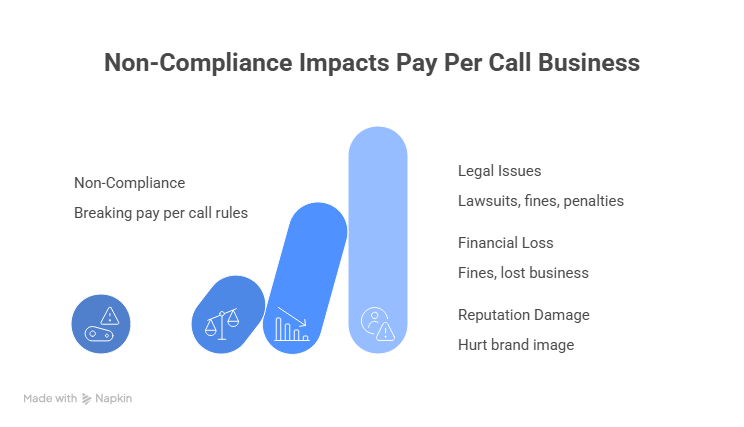
Legal Consequences of Non-Compliance
Not following pay per call rules can lead to big legal problems. You might face lawsuits, fines, and penalties that hurt your business. For example, breaking the Telephone Consumer Protection Act (TCPA) can cost up to $1,500 per offense.
Financial Impact of Violations
The cost of not following rules can be huge. You'll face fines, lost business, and damage to your brand's image. One mistake can cost your business thousands.
Reputation Management Considerations
Your reputation is very important. Not following the rules can really hurt it. Customers trust and choose businesses that follow the rules. Staying compliant is key to a good brand image.
By following pay per call compliance rules, you protect your business. You avoid legal and financial risks and keep a good reputation.
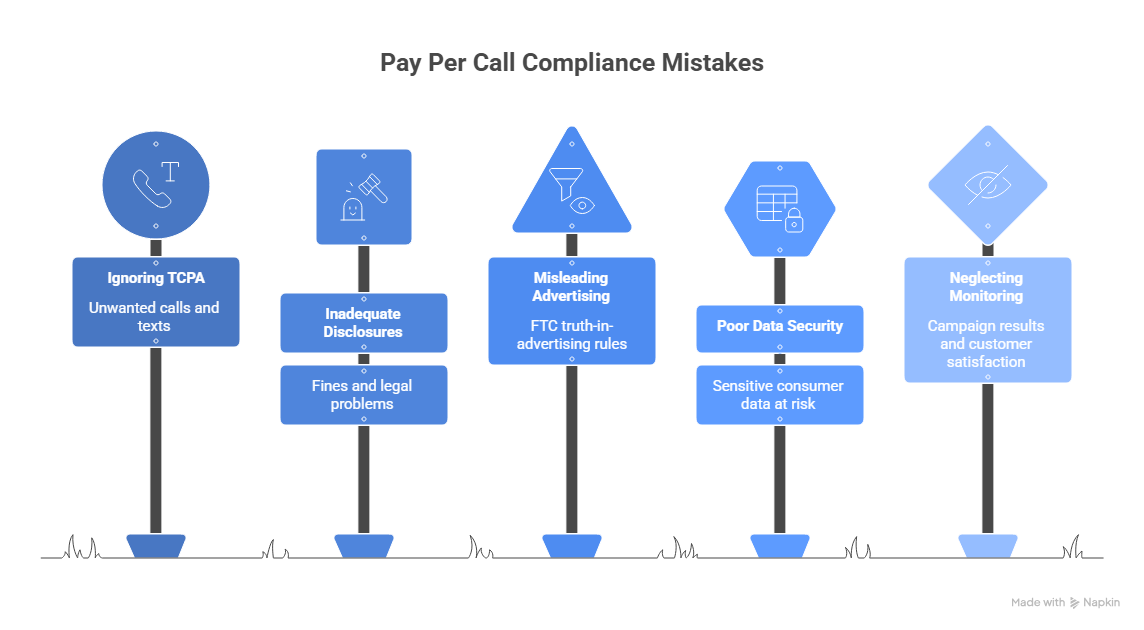
5 Most Common Compliance Mistakes in Pay Per Call
Mistake #1: Ignoring TCPA Requirements
Ignoring TCPA rules can cause big problems for Pay Per Call businesses. The Telephone Consumer Protection Act (TCPA) aims to stop unwanted telemarketing. It protects consumers from annoying calls and texts.
Understanding the Telephone Consumer Protection Act
The TCPA controls telemarketing calls, auto-dialed calls, and unsolicited texts. It says businesses need to get written consent from consumers first. This is before they can make calls or send messages.
Common TCPA Violations in Pay Per Call
Some common mistakes include making calls without consent, not giving clear opt-out options, and not keeping accurate do-not-call lists.
How to Ensure TCPA Compliance
To follow TCPA rules, businesses need to manage consent well and keep accurate records.
Consent Documentation Best Practices
For consent documents, record the date, time, and how consent was given. Also, note the specific terms agreed upon by the consumer.
Do-Not-Call List Management
Good do-not-call list management means updating it often. Make sure everyone knows about it. And always respect consumer requests to be removed.
Mistake #2: Inadequate Call Recording Disclosures
Inadequate call recording disclosures can cause big legal problems for businesses in the pay-per-call industry. You must follow all call recording disclosure laws to avoid fines.
Legal Requirements for Call Recording
Call recording laws differ by state. But, you must tell consumers their call is being recorded. This is done with a clear statement at the call's start.
Best Practices for Disclosure Scripts
Creating a clear and simple disclosure script is key. Best practices include using easy-to-understand language. Make sure your script is used for all calls.
Two-Party Consent State Considerations
In some states, you need two-party consent for call recordings. This means all call participants must agree to being recorded. Knowing the laws in your states is crucial. Not following these laws can lead to serious penalties.
Mistake #3: Misleading Advertising and Marketing Claims
Making misleading ads is a big mistake for Pay Per Call marketers. The Federal Trade Commission (FTC) watches ads closely. They make sure they follow truth-in-advertising rules.
FTC Truth in Advertising Standards
The FTC says ads must be honest and not misleading. They need to have proof for their claims. Advertisers must be clear and not hide important details.
Avoiding Deceptive Marketing Practices
To not trick people, ads should clearly share all important info. This means being open about prices, terms, and other key stuff. This helps people make smart choices.
Documentation and Substantiation Requirements
Ads need proof to back up their claims. This proof shows how good a product or service is. By following FTC rules, Pay Per Call marketers can stay safe from bad ad mistakes.
Mistake #4: Poor Data Security Practices
Poor data security can ruin your Pay Per Call business. You deal with sensitive consumer data that needs strong protection. This is to keep it safe from unauthorized access and breaches.
Consumer Data Protection Requirements
You must follow laws like the Telephone Consumer Protection Act (TCPA) and the California Consumer Privacy Act (CCPA). Strong data protection policies are key to avoid legal and financial issues.
Secure Call Data Storage Solutions
To keep call data safe, use encrypted storage solutions. Also, make sure data transfers are secure. Regular security checks can spot weak spots in your storage.
Breach Response Planning
A breach response plan is vital to lessen a data breach's impact. It should outline how to inform affected parties and work with regulators.
CCPA and Other Privacy Law Implications
The CCPA requires you to tell consumers about data breaches. Not doing so can lead to big fines. Knowing other privacy laws, like the GDPR for European consumers, is also important.
Mistake #5: Neglecting Call Quality Monitoring
Call quality monitoring is key in Pay Per Call marketing, but often ignored. It's vital for better campaign results and happier customers.
Call Quality Metrics That Matter
To check call quality, focus on call duration, conversion rates, and customer satisfaction scores. These metrics help spot where your campaigns can get better. Implementing Effective Monitoring Systems
Setting up a good call quality monitoring system means using AI-powered call analytics and speech recognition tools. These tools analyze call recordings to help shape your marketing plans.
Addressing Quality Issues Proactively
When you find quality problems, fix them fast. This means regular training for your call center staff and continuously improving your call scripts. These actions can greatly enhance your call quality.
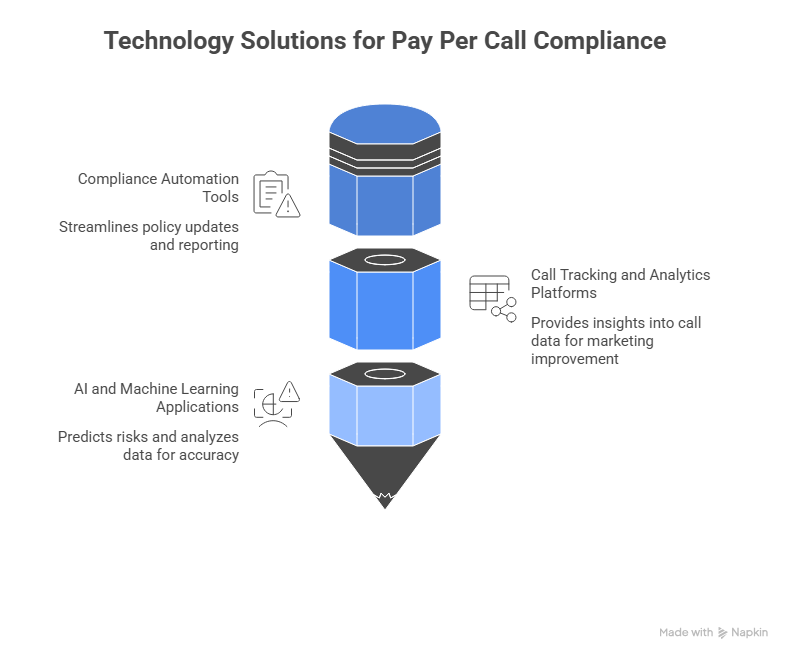
Technology Solutions for Pay Per Call Compliance
Advanced technology is changing how we handle pay per call compliance. It makes the process more efficient and reliable. As the industry grows, technology helps businesses meet complex rules.
Compliance Automation Tools
Compliance automation tools make following rules easier. They update policies, check for compliance, and create reports. This saves businesses a lot of time and effort.
Call Tracking and Analytics Platforms
Call tracking and analytics platforms give insights into call data. They help businesses improve their marketing and follow rules. By looking at call metrics, companies can spot issues early.
AI and Machine Learning Applications
AI and machine learning are making pay per call compliance better. They predict risks, make decisions, and analyze call data more accurately. This helps businesses stay on track.
Everything You Need to Run Profitable and Compliant Pay-Per-Call Campaigns
Running pay-per-call campaigns today requires more than traffic and great offers. As you have seen, compliance mistakes can lead to serious legal, financial, and reputational consequences. From TCPA violations to misleading claims, poor documentation, and weak data security, the risks are real and costly.
At UNIK360, we built a complete ecosystem designed to help you run profitable and compliant pay-per-call campaigns without juggling multiple disconnected tools. Instead of patching together platforms for training, landing pages, follow-ups, tracking, automations, and creatives, you get everything in one place.
We provide:
Structured training so your team understands compliance and performance best practices.
High-converting landing pages built with transparency and clarity.
Automated follow-ups aligned with consent and documentation standards.
Integrated call tracking and optimization systems.
Creative assets designed to meet advertising guidelines.
Over 25 tools and systems inside one subscription
Frequently Asked Questions (FAQs) About Common Compliance Mistakes in Pay Per Call
What is pay per call compliance?
Pay per call compliance refers to following all legal and regulatory requirements when running call-based marketing campaigns. This includes respecting consumer consent laws like the TCPA, providing proper call recording disclosures, avoiding misleading advertising claims, protecting customer data, and maintaining accurate documentation.
Why is TCPA compliance so important in pay per call marketing?
The Telephone Consumer Protection Act (TCPA) regulates telemarketing calls, auto-dialed calls, and text messages. Violations can result in penalties of up to $1,500 per call. If you run pay-per-call campaigns without proper consent documentation or do-not-call list management, your business could face significant legal and financial consequences.
How long should I keep pay per call compliance documentation?
Retention periods vary, but TCPA-related records should generally be maintained for at least three years. This includes consent records, call logs, scripts, and compliance documentation.