
Pay Per Call Script Best Practices to Increase Conversions and ROI
Are you looking to maximize your return on investment (ROI) with pay per call marketing? A well-crafted call script is key to converting calls into sales. Effective call scripts can make a significant difference in the success of your campaigns. By using the right call script templates, you can ensure that your calls are engaging, informative, and persuasive.
In this article, we'll explore what makes a good pay per call script and provide you with examples and templates to improve your marketing strategy.
Why an Effective Pay Per Call Script is so Important
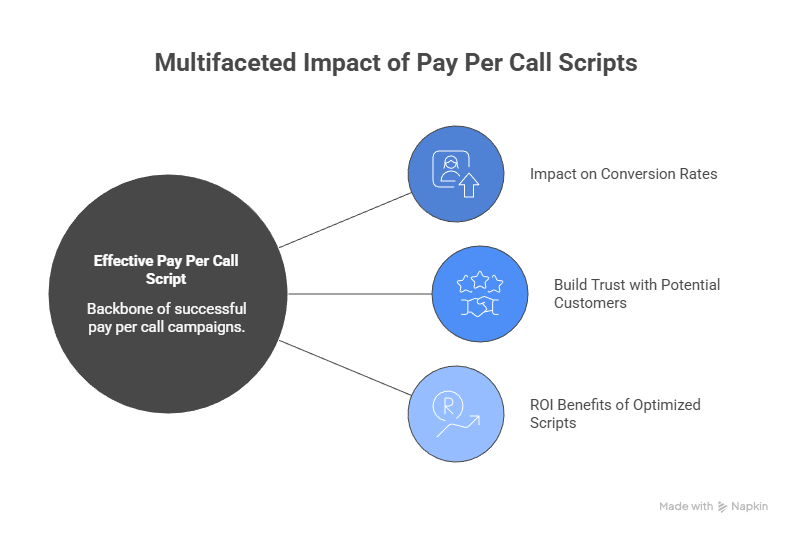
To maximize the potential of pay per call marketing, it's essential to create a script that builds trust and drives conversions. An effective pay per call script is the backbone of any successful pay per call campaign, as it directly influences how potential customers perceive your brand and respond to your offerings.
1. Impact on Conversion Rates
A well-crafted pay per call script can significantly boost your conversion rates by ensuring that your message is clear, concise, and compelling. It guides the conversation in a way that addresses the customer's needs and concerns, making them more likely to take the desired action.
For instance, a study by MarketingSherpa found that campaigns with well-structured scripts saw a notable increase in conversion rates compared to those without.
2. Build Trust with Potential Customers
Trust is a critical factor in converting leads into customers. An effective pay per call script helps in building this trust by providing valuable information, being transparent about the product or service, and showing empathy towards the customer's needs.
3. ROI Benefits of Optimized Scripts
Optimizing your pay per call script can lead to significant ROI benefits. By improving conversion rates and reducing the time spent on calls, a well-optimized script can lower your cost per acquisition and increase the overall return on investment.
By focusing on creating an effective pay per call script, you can increase your pay per call marketing efforts, leading to better conversion rates, stronger customer trust, and ultimately, a higher ROI.
Key Elements of a Successful Pay Per Call Script
The effectiveness of your pay per call campaign hinges on the quality of your script. A well-crafted script is more than just a series of questions and answers; it's a strategic tool designed to engage potential customers and drive conversions.
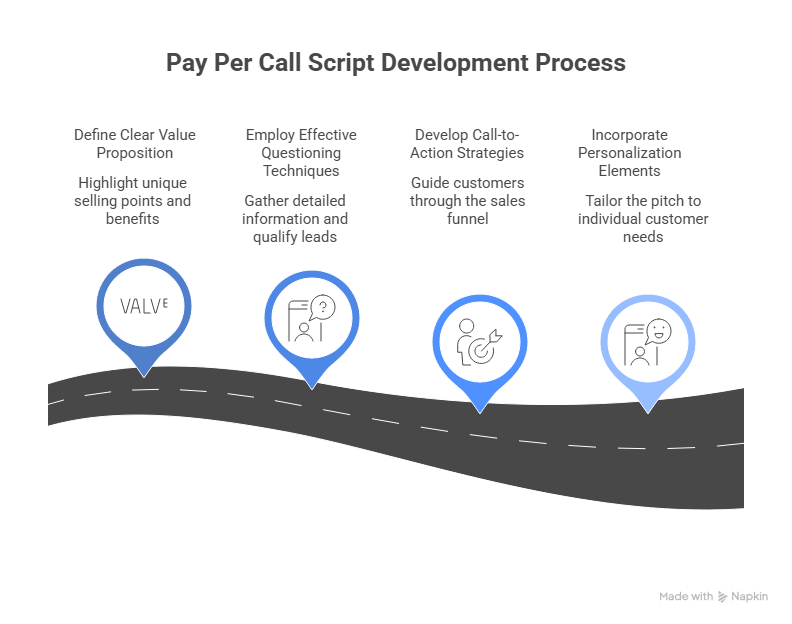
1. Clear Value Proposition
A clear value proposition is crucial in a pay per call script. It should immediately convey the benefits of your product or service, setting you apart from competitors. This can be achieved by highlighting unique selling points and emphasizing how your solution addresses the customer's needs.
2. Effective Questioning Techniques
Effective questioning techniques are vital for understanding the customer's requirements and preferences. Open-ended questions can help gather detailed information, while closed questions can qualify leads quickly. Active listening is also crucial in responding effectively to customer queries.
3. Call-to-Action Strategies
A well-planned call-to-action (CTA) strategy is crucial for guiding customers through the sales funnel. Your CTA should be clear, direct, and compelling, encouraging the customer to take the next step. This could involve scheduling a follow-up call or directing them to a website for more information.
4. Personalization Elements
Personalization can significantly enhance the effectiveness of your pay per call script. Addressing customers by name, referencing their specific needs, and tailoring your pitch accordingly can make your interaction feel more personalized and engaging. This can lead to higher conversion rates and customer satisfaction.
By incorporating these key elements, you can create a pay per call script that not only resonates with your target audience but also drives meaningful results for your business.
Pay Per Call Script Examples for Different Industries
The success of pay per call campaigns heavily relies on industry-specific scripts that resonate with the target audience. Different industries have unique needs, pain points, and customer expectations, making it crucial to tailor pay per call scripts accordingly.
Insurance Industry Scripts
For insurance companies, scripts should focus on understanding the customer's current insurance status, their needs, and any potential gaps in their coverage. For instance:
Asking qualification questions like, "What type of insurance are you currently looking for?"
Highlighting the benefits of the insurance plans, such as, "Our comprehensive plans offer extensive coverage at competitive rates."
Home Services Scripts
Home service providers, such as HVAC or plumbing services, need scripts that address emergency needs and offer timely solutions. Examples include:
Initial greeting: "Thank you for calling [Company Name]. How can we assist you today?"
Qualifying questions: "Are you experiencing an emergency repair need?"
Financial Services Scripts
Financial services companies require scripts that build trust and highlight their expertise. For example:
Introduction: "We're a leading financial advisory firm. How can we help you achieve your financial goals?"
Needs assessment: "Can you tell us a bit about your current financial situation and objectives?"
Healthcare Industry Scripts
Healthcare providers need scripts that are empathetic and informative. Examples include:
Initial contact: "Thank you for considering [Healthcare Provider]. How can we assist you with your healthcare needs?"
Service explanation: "We offer a range of services, including [list services]."
Legal Services Scripts
Legal services firms require scripts that convey professionalism and expertise. For instance:
Greeting: "Thank you for reaching out to [Law Firm]. How can our legal experts assist you?"
Case assessment: "Can you briefly describe your legal issue so we can direct you to the appropriate specialist?"
By using industry-specific pay per call scripts, businesses can improve their conversion rates and enhance customer satisfaction. It's essential to continually refine these scripts based on feedback and performance metrics.
How to Customize Your Pay Per Call Script for Your Target Audience
Understanding and adapting to your target audience's needs can significantly enhance your pay per call script's effectiveness. To create a compelling script, you must consider various factors that influence your audience's preferences and behaviors.
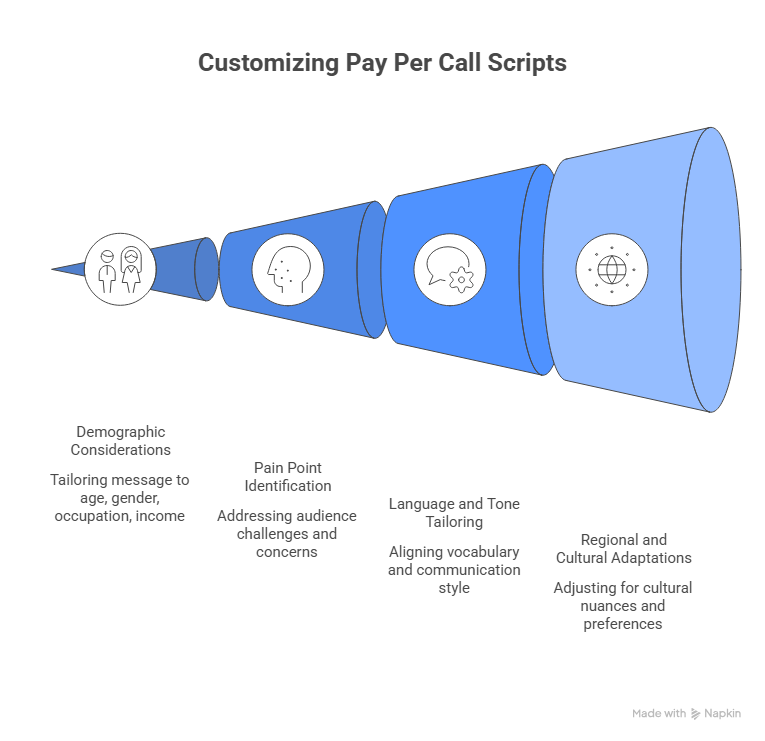
Demographic Considerations
When customizing your pay per call script, it's essential to consider demographic factors such as age, gender, occupation, and income level. These elements can help you tailor your message to resonate with your audience. For instance, a script targeting younger demographics might use a more casual tone, while one for older professionals might be more formal.
Pain Point Identification
Identifying the pain points of your target audience is crucial. By understanding their challenges and concerns, you can craft a script that addresses these issues directly, making your offer more appealing. Effective pain point identification can significantly boost conversion rates.
Tailoring Language and Tone
The language and tone of your script should align with your audience's preferences. Using the right vocabulary and communication style can make your message more relatable and engaging. For example, using technical jargon might be appropriate for a professional audience, while simpler language might be better for a general consumer audience.
Regional and Cultural Adaptations
Regional and cultural differences can significantly impact how your message is received. Adapting your script to accommodate these variations can enhance its effectiveness. This might involve adjusting your script for different accents, cultural references, or regional preferences.
By incorporating these considerations into your pay per call script, you can create a more personalized and effective marketing strategy that resonates with your target audience.
Improve Your Pay Per Call Success with UNIK360
Crafting effective pay per call scripts is crucial for achieving success in your marketing efforts. By understanding the key elements of a successful script, customizing it for your target audience, and training your team to execute it effectively, you can improve your conversion rates and ROI.
UNIK360 offers cutting-edge solutions to optimize your pay per call marketing efforts. By leveraging their expertise, you can elevate your pay per call success and drive more leads to your business. By implementing the strategies outlined in this article and partnering with UNIK360, you can take your pay per call marketing to the next level and achieve your business goals.
Join UNIK360 and improve your conversion ROI
Frequently Asked Questions (FAQs) About Pay Per Call Script
What is a pay per call script?
A pay per call script is a pre-written conversation guide used by call centers or sales teams to engage with potential customers and drive conversions over the phone.
What are some common mistakes to avoid in pay per call scripts?
Common mistakes to avoid in pay per call scripts include overly scripted conversations, neglecting to listen to customers, pushing too hard for conversion, and failing to update scripts regularly to reflect changing customer needs and market trends.
How often should I update my pay per call scripts?
You should update your pay per call scripts regularly to reflect changing customer needs, market trends, and industry developments, ensuring that your scripts remain relevant, effective, and optimized for maximum ROI.